The idea
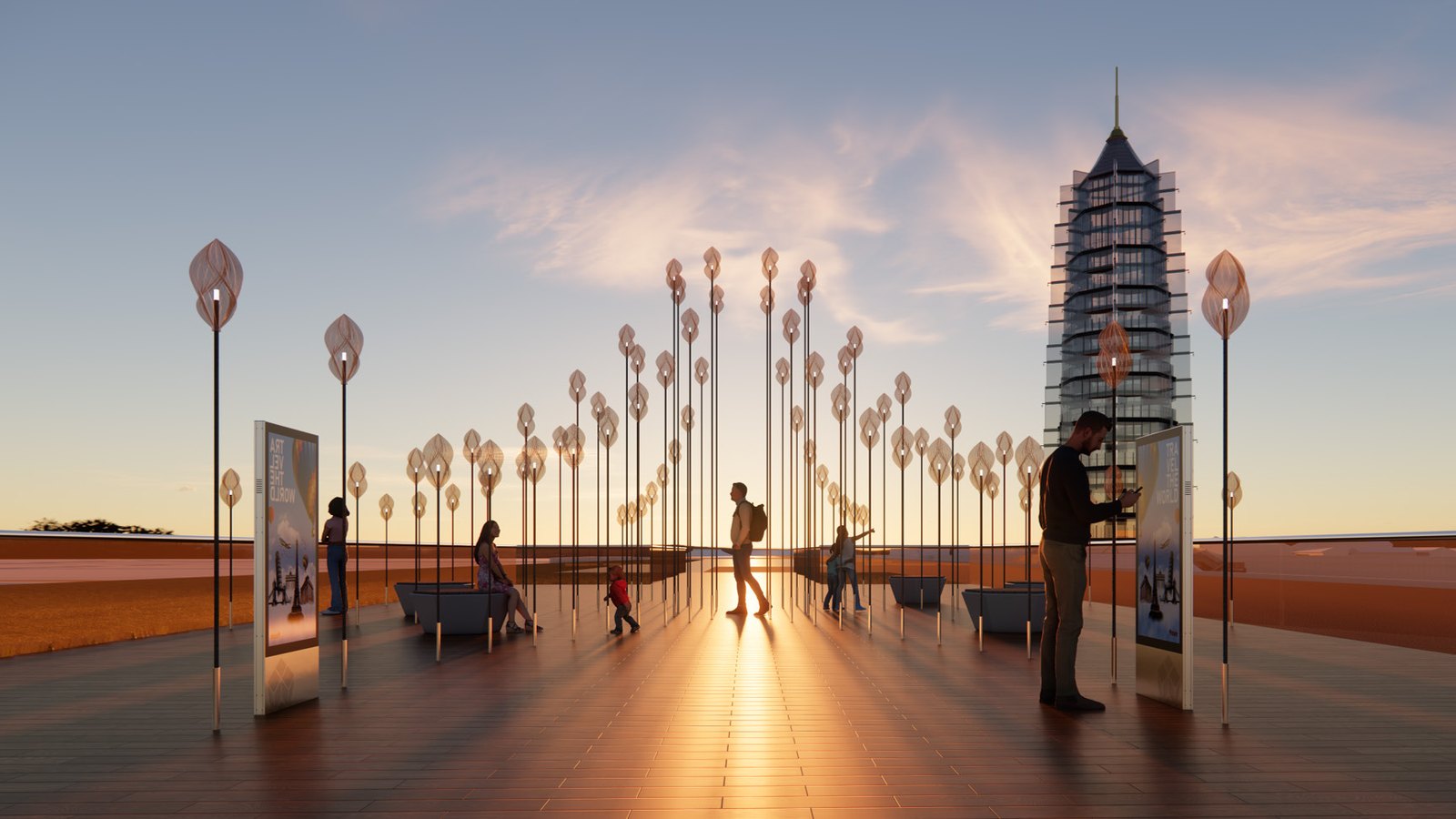
Historic temple grounds once carried a sonic identity: bells and wind chimes marking time, weather and ritual. Most of that soundscape is gone. The Garden of Living Bells brings it back, not as reconstruction, but as a responsive landscape.
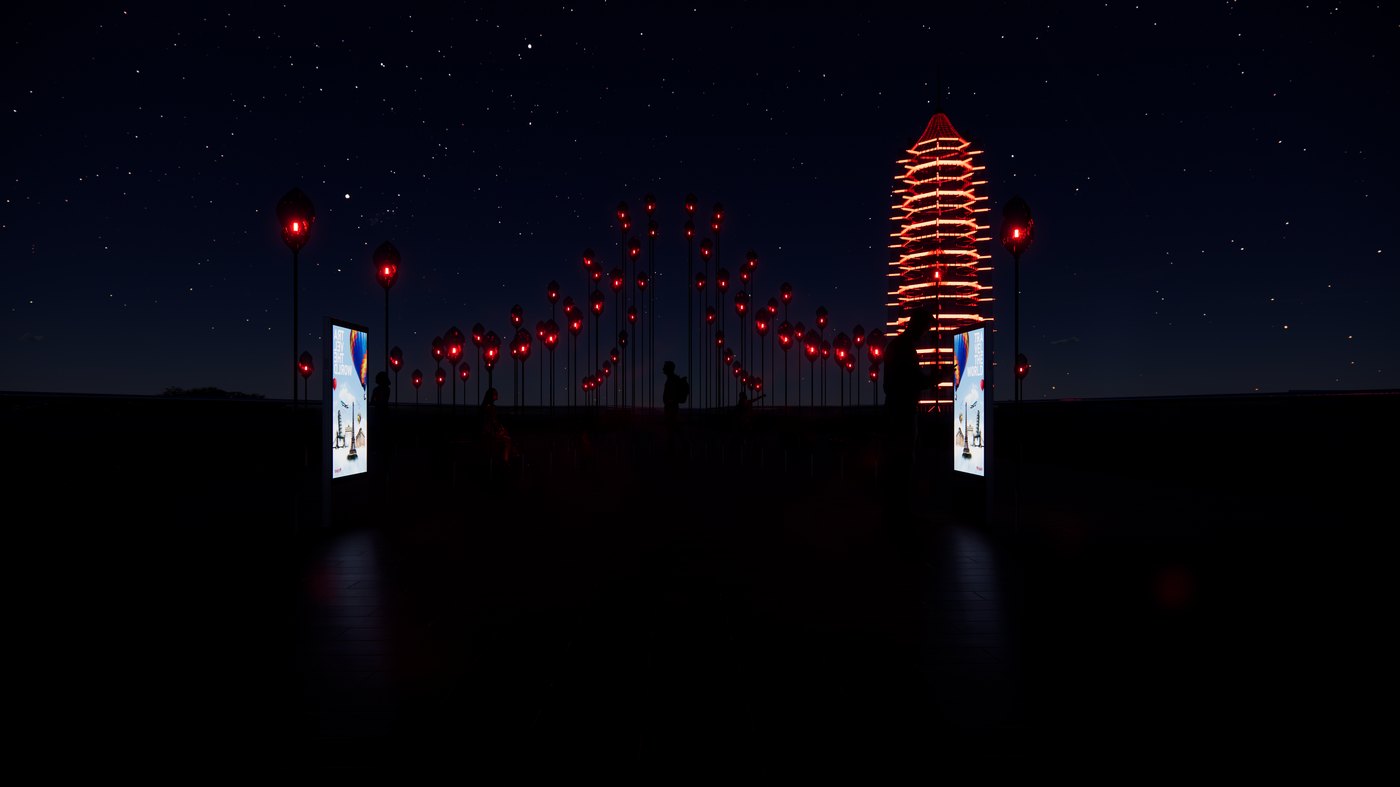
Each "bell" is a slender, bending-active rod crowned with a resonant head. Its bending is physical, driven by the wind and by a visitor’s touch rather than by the rod itself. Left alone, the field sways with the wind and hums quietly; as a visitor brushes past and the rods bend and spring back, embedded sensors read that motion and touch and answer with sound and light.
Why it matters
The project treats heritage as behaviour, not just form: what is preserved is the way the place responded to people. It won the Digital Heritage 2025 Global Innovator Competition, a UNESCO-partnered programme, and was exhibited at the World Internet Conference Cultural Heritage Digitalization Forum in Xi'an.
The installation is scheduled for construction in Nanjing by October 2026, turning a competition entry into a permanent, playable piece of the city.
One Tower, One River, One City
The brief asked what was lost: the tower's bells and wind chimes, the sounds and poems of the river, Zheng He's ships. The answer is one field: 72 rods in an 8×9 arrangement carrying 153 bells, their layout mimicking the entry gates to the temple, with dual bell tones of high and low pitch arranged as they once were on the tower.
How it's built
Carbon-fibre rods (12–16 mm) on stainless-steel bases, crowned with transparent 3D-printed ASA shades: lightweight, weatherproof, warm to the touch in winter, with an auto shut-down threshold for safety. Gyroscope sensors and spatial speakers drive the sound; the system is modular, wirelessly re-tunable in tone and colour for other museum programmes, and comes in at roughly a third of the proposed budget.
Featured in
Gallery · swipe →